 SoundLung
Exploring acoustic biomarkers across health, ageing, and disease
What could our voice tell us about our health? SoundLung explores measurable features of voice, called acoustic parameters, and their potential to serve as health indicators. Our research interests include measurement feasibility and reliability, relationships with age, respiratory and neurological conditions, and the role of artificial intelligence.
Research conducted at AlMaarefa University, Riyadh, Saudi Arabia.

Understanding the science behind sound
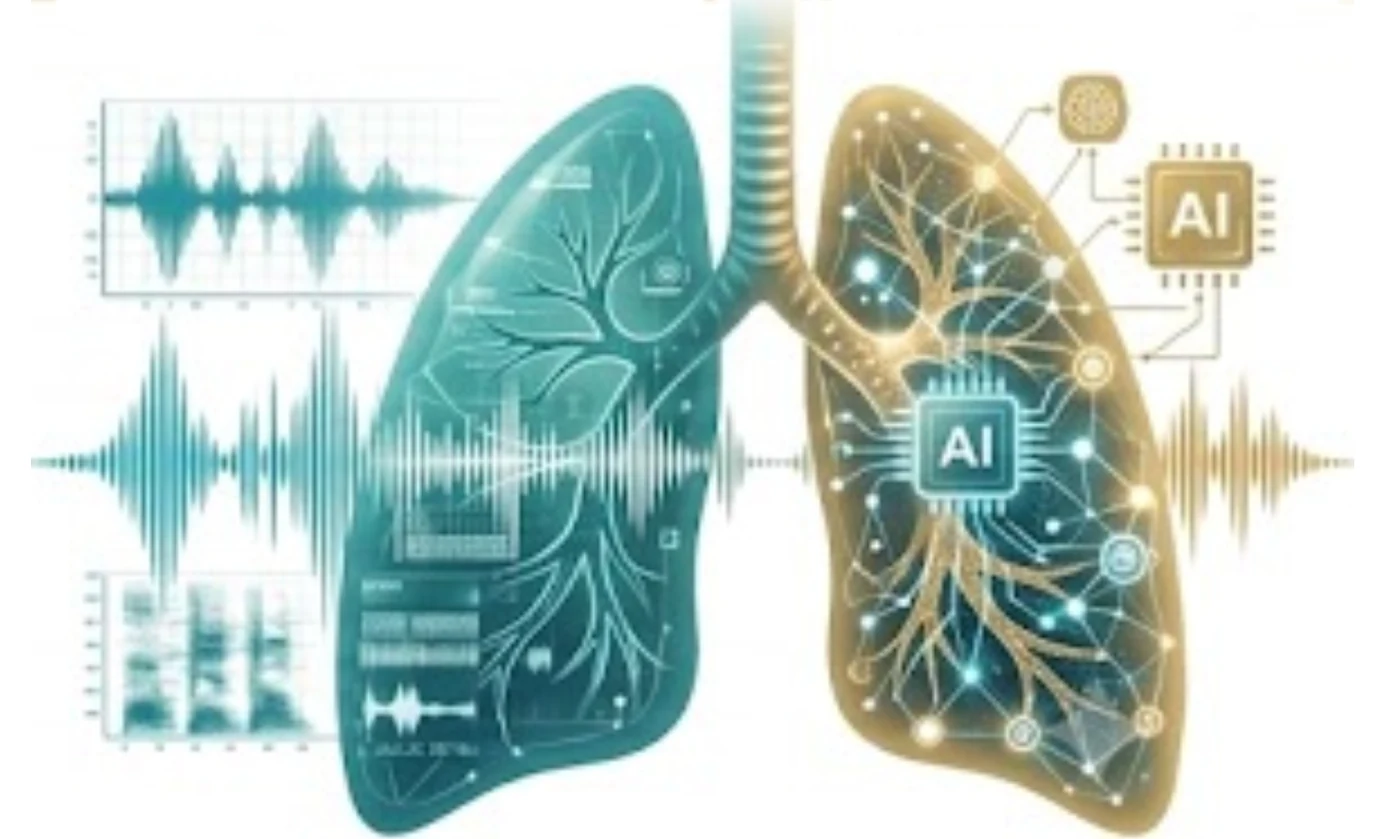
SoundLung is a research programme investigating how voice recordings can contribute to the study of human health. We examine how acoustic measurements are collected, how consistent they are, and what they may reveal about physiological function, ageing, and disease.
Our aim is to understand which measurements are useful, where their limitations lie, and what evidence is needed before they can be considered reliable acoustic biomarkers.
Why study voice?
Producing voice involves coordinated activity of the lungs, vocal folds, and nervous system. SoundLung asks whether measurements from voice recordings can help us understand aspects of these functions. We are interested not only in finding patterns, but also in establishing whether those patterns are consistent and meaningful.
Our central questionCan acoustic measurements provide dependable information about health?
Our research themes
These themes describe the programme’s wider scope. Individual studies address specific questions within it.
-
Feasibility
Can we collect useful measurements in practical ways?
We aim to examine whether voice recordings, including those made using smartphones, can provide acoustic measurements suitable for research.
-
Reliability
Can we trust the consistency of the measurements?
We aim to assess how results vary across repeated recordings, devices, recording conditions, and analysis methods.
-
Ageing and respiratory function
How do acoustic parameters relate to age and breathing?
We aim to investigate relationships between acoustic measurements, age, respiratory function, and functional health.
-
Neurological conditions
What can acoustic patterns tell us about nervous-system function?
We aim to explore how voice characteristics differ across neurological conditions and whether these differences have potential value for health assessment.
-
Artificial intelligence
Can AI help us make sense of complex acoustic data?
We aim to investigate the role of artificial intelligence (AI) and machine learning in analysing acoustic features, identifying patterns, and developing models for further testing.
Current research progress
October 2026 · Last updated 22 October 2026
-
Secondary-analysis article
Final internal reviewAn article based on secondary analysis of previously collected data is in the final stage of internal author review before submission.
-
Review article
Final compilationA critical narrative review of smartphone-recorded voice and related acoustic biomarkers is in the final stages of compilation, examining research methods, potential applications, limitations, and gaps in the evidence.
-
Acoustic-parameter data collection
OngoingData collection is underway to support the project’s continuing investigation of acoustic measurements.
Looking ahead
Our longer-term direction is to connect dependable acoustic measurement with meaningful health questions.
Future studies will build on the evidence from current work, with attention to measurement reliability, comparisons with established assessments, and testing across different populations. AI-based approaches will be explored where they are appropriate to the research question and available data.
The goal is to establish where acoustic biomarkers may be useful, and where they may not be.
Meet the principal investigator
Dr Shahabuddin T Shaikh
Principal Investigator and Project Lead
Assistant Professor of Physiology
College of Medicine, AlMaarefa University
Riyadh, Kingdom of Saudi Arabia
Dr Shaikh’s interests include neurophysiology, ageing, physiological assessment, and scientific research. Through SoundLung, he is developing a research programme connecting physiology with acoustic measurement and digital-health research.
Team
SoundLung is led by Dr Shahabuddin T Shaikh, Principal Investigator and Project Lead, at AlMaarefa University, Riyadh, Saudi Arabia. The project is supported by student contributors and collaborators involved in research activities across different stages of the programme.
The current study is conducted at AlMaarefa University and has received approval from the university’s Institutional Review Board (IRB).
Research setting and ethics
SoundLung research is conducted at AlMaarefa University, Riyadh, Kingdom of Saudi Arabia. The current study protocol has received approval from the university’s Institutional Review Board (IRB).
Research status. SoundLung is an ongoing research programme, not a diagnostic service. Its investigational methods are not a replacement for clinical assessment.
Contact and collaboration
We welcome enquiries from researchers and clinicians interested in acoustic analysis, physiology, ageing, respiratory health, neurological conditions, and AI methods.
Email: sshaikh@um.edu.sa
Location: AlMaarefa University, Riyadh, Saudi Arabia